

Sleep Apnea: Far More Serious Than Just Snoring

Updated: Nov 6
Most people dismiss snoring as a harmless nighttime habit. But sometimes, it is a warning sign of a much more serious condition called Sleep Apnea.
Sleep apnea is a disorder in which breathing repeatedly stops and starts during sleep, often without the person even realizing it. Approximately 32.4% of U.S. adults (about 83.7 million people) are estimated to have obstructive sleep apnea (OSA).

Why i think that Sleep Apnea is a Misnomer?
It’s a lifestyle related metabolic problem and honestly should be renamed as sleep apnea syndrome because of its association with a host of other metabolic issues. It can affect multiple systems in the body, including the heart, brain, metabolism, and mental health.
Lifestyle factors such as excess body weight, alcohol consumption, and smoking play a key role. The encouraging news is that sleep apnea is treatable, and in some people, particularly those with obesity-related obstructive sleep apnea, lifestyle changes can significantly improve the condition or even lead to remission.
Why should you take sleep apnea seriously?
Untreated sleep apnea may contribute to:
High blood pressure, sometimes difficult to control
Persistent fatigue and daytime sleepiness
Poor concentration, memory problems, and mental fog
Depression and mood disturbances
Frequent morning headaches
Metabolic problems, including insulin resistance
Acid reflux and disturbed digestion
Heart rhythm abnormalities, heart disease, and stroke
Untreated severe sleep apnea can reduce life expectancy by an estimated 7 to 8 years and triple the risk of death from all other causes.

Why most people don't even know that they have sleep apnea?
Often, it is the spouse or sleeping partner who first notices the loud snoring, gasping, choking, or repeated pauses in breathing. For someone who sleeps alone, these warning signs may go unnoticed for years. Many people seek medical attention only when they develop persistent fatigue, uncontrolled blood pressure, or other serious complications like heart attack ot stroke.
There are two main types of sleep apnea.
1. Obstructive Sleep Apnea (OSA):99% 0f cases the more common type, caused by repeated blockage or narrowing of the upper airway during sleep.
2. Central Sleep Apnea (CSA): only 1% of cases. A less common condition in which the brain temporarily fails to send the appropriate signals to the muscles responsible for breathing.
For purpose of this blog, we will restrict to only the most common type which is OSA seen in 99% of sleep apnea patients.
Can an experienced physician recognize sleep apnea just by looking at someone? Yes

Physical appearance can sometimes provide important clues. A neck circumference of greater than 17 inches (43 cm) for men or greater than 16 inches (40 cm) for women is a key risk factor associated with obstructive sleep apnea. One particularly noticeable feature is a short, thick neck with increased neck circumference, sometimes making the neck appear to merge into the shoulders. This body structure can be associated with a narrower upper airway and an increased risk of breathing obstruction during sleep. A sleep study is often necessary to confirm this diagnosis.
Why Neck Size Matters?
Airway Crowding: Excess soft tissue and fat deposits around a larger neck can narrow or compress your upper airway when you sleep.
Muscle Relaxation: When throat and tongue muscles relax during sleep, a narrowed airway is much more likely to partially or completely block airflow (causing snoring or breathing pauses).
Obstructive sleep apnea (OSA) and central sleep apnea (CSA) both cause breathing to repeatedly stop and start during sleep, but they happen for completely different reasons.
Obstructive Sleep Apnea (OSA) seen in 99% of sleep apnea one can see
· What happens: Throat muscles and soft tissues relax too much and physically block (collapse) the upper airway.
· Body response: Your chest and abdomen still try to move and breathe against the blocked airway.
· Common signs: Loud snoring, gasping or choking sounds, excessive fatigue.
· Common causes: Excess weight, naturally narrow airways, enlarged tonsils (in children), or neck anatomy.
Treatment options in Modern Medicine-
It does not address the root cause and addresses the symptoms of snoring only and hence it is impossible to reverse using following methods.
1-CPAP (Continuous Positive Airway Pressure): The gold-standard, first-line treatment for moderate-to-severe OSA. It delivers a steady stream of air through a nose or face mask to keep your upper airway open.
2-Oral Appliances (Dental Devices)- Mandibular Advancement Devices: Custom-fitted mouthguards made by a dentist that gently shift your lower jaw and tongue forward to keep your throat open.
Surgical methods
1- Hypoglossal Nerve Stimulation (e.g., Inspire Therapy): A small, pacemaker-like device implanted under the skin of the chest that delivers mild pulses to the airway muscles/nerve to keep the airway clear during sleep. Used for moderate-to-severe OSA when CPAP fails. [
2- Upper Airway Surgery: Procedures such as tonsillectomy, uvulopalatopharyngoplasty (removing excess tissue), or jaw advancement (moving the upper and lower jaws forward) to physically enlarge the airway.
3- Bariatric Surgery: Weight-loss surgery considered if severe obesity contributes to the condition and other treatments do not work
The oral and surgical options sounds too invasive for most even today and the CPAP machine feels less invasive but again the compliance rate of CPAP machine is low ffor many reasons. CPAP compliance rates typically range from 50% to 80% short-term but decline to 45% to 54% over the long term. Issues like nasal congestion, mask discomfort, pressure intolerance, and frequent nighttime awakenings contribute to dropping out or missing hours.
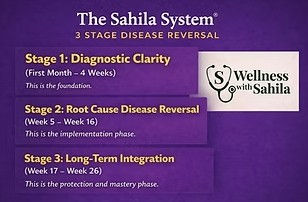
How is The Sahila System different- The Sahila System will address the root cause of your problem and based on your age, mobility and other comorbidities, we can attempt to reverse or keep the sleep apnea under remission.
Major Diseases & Conditions Linked to Untreated Sleep Apnea
High Blood Pressure (Hypertension): Repeated drops in blood oxygen trigger the sympathetic nervous system, leading to elevated nighttime and daytime blood pressure.
Cardiovascular and Heart Diseases: Strain on the heart increases the risk of heart attack, stroke, and death, coronary artery disease, and congestive heart failure.
Cardiac Arrhythmias: Irregular heartbeats—most notably Atrial Fibrillation are up to four times more common in people with sleep apnea.
Type 2 Diabetes: Intermittent hypoxia and sleep disruption impair glucose metabolism and increase insulin resistance, sharing a strong bidirectional relationship with the disorder.
Metabolic Syndrome: Patients frequently develop a cluster of conditions including high blood sugar, abnormal cholesterol, high blood pressure, and excess abdominal fat.
Stroke: Vascular stress and changes in blood flow elevate the long-term risk of cerebrovascular events.
Depression and Mood Disorders: Poor sleep quality, chronic fatigue, and physiological stress contribute to major depressive disorders and cognitive difficulties.
Gastroesophageal Reflux Disease (GERD): A high rate of Acid Reflux, gastritis and esophagitis occurs in them.

Comments