

Estrogen- A Sacred Feminine Intelligence (Part 2): Why this Hormone commands Respect & Protection?

Updated: Jan 16

Over 6 million women in the U.S. struggle with PCOD, 80% experience PMS, 80% by the age 50 develop fibroids and 40% of young girls live with iron-deficiency anemia. If these numbers don’t alarm you, what will? Women’s health is not just misunderstood — it is consistently overlooked, minimized, and taught through a completely distorted lens.
Reconnect Through Nutrition, Movement & Detoxification:
For reproductive age women from 20-50 years-Supporting girls early ensures that they enter their menstrual years with balance, strength, and healthy hormonal rhythm.
Foods to Include Regularly-
1-Foundational foods: black sesame seeds, pomegranate, black urad dal, figs, dates, and millets.
2-During ovulation: Whole black urad lentils are especially important at this stage. Include them in any form—dosa/idli batter, soups, sambar, dips, vadas, or traditional sweets.
3-During menstruation: To ease cramps and reduce heavy bleeding, add fenugreek seeds consistently, whether as powders, dips, or mixed into dosa batter.
4-Pre-ovulation: Black sesame seeds become essential for supporting hormonal balance and preparing the body for the next cycle.
Hemoglobin & Iron Support-
Maintaining hemoglobin above 11 is crucial for menstruating girls. Levels around 10 or below signal inadequate nutrition and can create long-term health issues, including reduced fertility later in life. It’s wise to check Hb levels every 6 months during the first few years after menarche—and more often if she feels unusually tired or “not herself.”
For iron-deficiency anemia, prioritize millets, especially bajra (pearl millet) and ragi (finger millet)—both rich in iron and essential as girls enter puberty. Two other powerful foods are soy, with natural phytoestrogens, and eggs, which provide high-quality protein and nutrients.
Before Trying to Conceive
Prepare your body by practicing asanas that activate and balance the Swadhisthana (Sacral) Chakra. These movements open the pelvis, enhance reproductive energy, and support a smoother, more aligned childbirth experience.
Nourishment is equally important—all the foods mentioned above help regulate menstrual cycles and support the development of healthy, high-quality eggs.
The complete set of yoga, breathwork, and meditation techniques for the Sacral Chakra is taught exclusively inside my Chakra Chariot Program.
Here is the link to enroll in my upcoming Women's Health Reset program
Removal of Toxins-
1-Sugar
The number one disruptor of fertility energy is sugar and sugar-based products—sucrose, sorbitol, fructose, high-fructose corn syrup, aspartame, and more.
These substances destabilize the fertility chakra (swadhisthana chakra) and contribute to excess visceral fat (deep belly fat). Over time, this fat becomes hormonally active, producing estrogen-like compounds through the enzyme aromatase, which can interfere with natural reproductive rhythms.
Fat Distribution & Visceral Fat

In healthy premenopausal women, estrogen naturally guides fat to the hips and thighs (subcutaneous fat), which is protective and hormonally balanced.
When estrogen levels drop—such as during perimenopause or menopause—the body shifts to storing more visceral fat around internal organs. This type of fat is metabolically dangerous and significantly increases the risk of conditions like type 2 diabetes.
While subcutaneous fat can produce small amounts of estrogen via aromatase, an increase in visceral fat creates a distorted hormonal environment. This imbalance contributes to many of today’s metabolic health issues, including irregular cycles, fertility challenges, and chronic inflammation.
2-Modern Farming Practices & Their Impact on Hormonal Health
Another major concern today is the quality of meat and dairy. Most commercial chicken, goat, and beef in the U.S. are exposed to some form of growth hormone to accelerate production. The meat industry is a multibillion-dollar system designed to meet massive demand—and animals naturally take time to be born, mature, mate, and grow.To speed up this cycle, producers often rely on synthetic estrogen-like hormones, delivered through injections, pellets, or mixed feed.
When young girls—especially preteens—consume meat or dairy containing these hormone residues, their bodies may interpret these synthetic compounds as their own estrogen. This can trigger early breast development, early puberty, and earlier use of hormonal contraception (due to early engagement of sexual practices) , sometimes as young as 13–15. In such cases, the menstrual cycle becomes shaped more by external synthetic hormones than by the girl’s own natural estrogen.
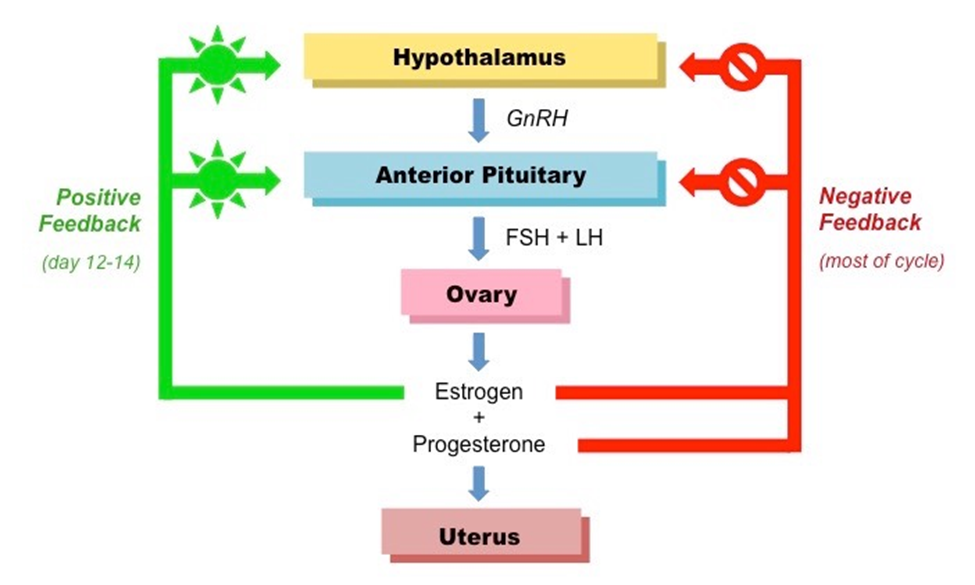
Over time, this can dull the ovaries’ and uterus’s sensitivity to internally produced hormones. Synthetic estrogen is created chemically in a lab; it may mimic natural estrogen, but its effects are not identical. When the body receives excess external hormones, it reduces its own production—a process known in modern medicine as a negative feedback loop. As a result, many girls may physically appear mature yet are not producing healthy levels of natural estrogen.
Once the body becomes dependent on externally sourced estrogen, it no longer follows the rhythmic pattern of a true menstrual cycle. So it is no surprise that women experience irregular periods, severe cramps, fibroids, ovarian cysts, miscarriages, and rising infertility.
The divine intelligence of estrogen is being ignored—and in many cases, replaced. When natural estrogen is not honored or supported, its rhythm gradually shuts down. A woman becomes dependent on the synthetic hormones hidden in her food rather than the hormones her own body is meant to produce.
In yogic terms, this represents a complete blockage of the Swadhisthana Chakra—the center of creativity, fertility, and feminine vitality.
Why Do Some Women Who Eat Commercial Meat & Dairy Have No Menstrual Issues?
This is one of the most common questions I receive, and my answer is always the same: not every smoker develops lung cancer, but a large percentage of lung cancer patients are smokers.
In the same way, not every woman who eats meat or drinks milk from modern industrial farms will develop menstrual problems. However, the majority of women I see with Swadhisthana (sacral) chakra imbalance or hormonal disruption have a long history of consuming these products.
This is the uncomfortable truth. Regardless of what meat and dairy companies advertise, their primary focus is increasing production and maximizing revenue, which depends entirely on higher consumer intake. Your hormonal health—or the state of your sacral chakra—is rarely their concern, and in many cases, not even within their awareness.
Ultimately, you must be your own judge. Listen to your body, honor your cycle, and choose your diet with wisdom rather than falling for marketing claims that do not have your wellbeing at heart.
In part 3 of the blog we will explore more on nutrition and alignment for menopausal age women.
Here is the complete list of Foods that support women's health and must be part of your regular diet (as recommended by Ayurveda & Siddha)
-fenugreek seeds
-black urad lentils
-black sesame seeds
-white pumpkin juice
-lemon herbal tea
-dill leaves
-banana flower
-adamant creeper
-fennel seeds
-pearl millet
-finger millet
-soy
-eggs


Comments